Watercolor White Rose Wedding Clipart: A Complete Design Guide
That moment when you open a client’s wedding mood board and see the words “elegant, timeless, romantic” written next to blank placeholder boxes? It’s a familiar scenario for any designer. The vision is clear: soft whites, delicate florals, and a sense of refined beauty. But translating that vision into tangible design assets—especially with tight deadlines and budget constraints—can be a real challenge. This is where having a high-quality, versatile resource like a set of watercolor white rose elements becomes not just a convenience, but a creative lifeline.
More Than Just a Pretty Flower: Understanding the Asset
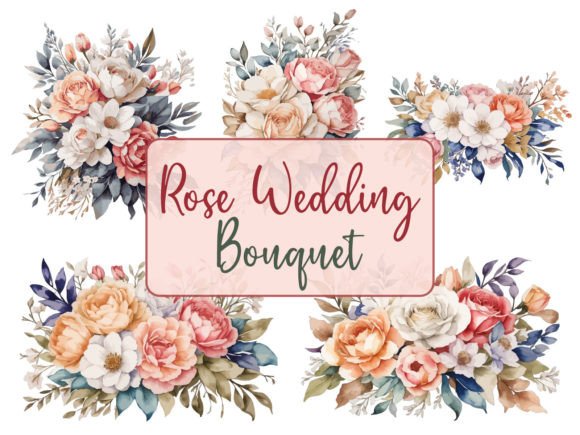
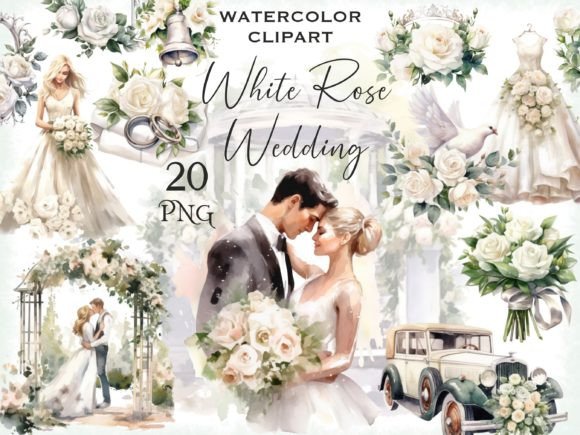
At its core, this collection is a set of 20 unique, hand-painted white rose illustrations, each saved as a high-resolution PNG file with a transparent background. The watercolor style gives them a soft, organic feel that digital vector graphics often struggle to replicate. They look like they’ve been gently brushed onto the screen, with subtle gradients and gentle textural variations that add depth and authenticity. This isn't a clipart bundle of stiff, cartoonish flowers; these are nuanced digital paintings designed to evoke a specific, sophisticated emotion.
The practical specifications are built for professional use. Each file is a generous 2100x2100 pixels at 300 DPI. What does that mean in plain terms? It means you can scale these roses for a small website icon or a large-format poster without losing crispness. The transparent background is the key feature here—it allows you to layer these roses seamlessly over any color, pattern, photo, or texture, making them incredibly adaptable to any project’s background.
From Screen to Print: Where These Roses Truly Shine
The true value of a design asset is measured by its versatility. Let’s move beyond the obvious wedding invitation (though they’re perfect for that) and explore how these floral elements can solve real design problems across various media.
For branding and logo design, especially for businesses in the wedding industry, event planning, floral shops, or high-end boutique services, these roses can form the cornerstone of a visual identity. Imagine a subtle watercolor rose as the background of a business card, or a single bloom used as a delicate accent in a logo. They lend an immediate sense of craftsmanship and luxury. When considering font pairing, these soft, organic shapes pair beautifully with clean, modern sans-serif fonts for contrast, or with elegant script fonts for a cohesive, romantic feel. The goal is balance—letting the floral art enhance, not overpower, your typography.
In packaging design, they can transform a simple box or label into something special. A cluster of roses on a candle box, a single stem on a soap wrapper, or a repeating pattern on tissue paper—these applications add tangible value and a premium feel to physical products. For social media graphics and web design, they’re invaluable for creating cohesive templates. Use them as background elements for quote posts, as borders for Instagram stories, or as decorative accents on a website’s “About” page to instantly elevate the visual narrative. They help maintain a consistent, professional aesthetic that builds brand recognition across every touchpoint.
For print materials like menus, programs, and thank-you cards, and for editorial layouts in magazines or blogs, they provide soft, non-distracting visual interest. They can fill negative space, frame text, or create elegant dividers. Even in digital products like planners, templates, or online course materials, incorporating these florals can significantly enhance the perceived value and user experience, making the product feel more complete and thoughtfully designed.
Integrating Florals with Intention: Practical Design Advice
Having a beautiful asset is one thing; using it effectively is another. Here’s how to integrate these elements with purpose.
Consider the Visual Hierarchy. Don’t just sprinkle roses randomly. Use them to guide the viewer’s eye. A large, full bloom can anchor a composition, while smaller buds or petals can be used as subtle supporting details. Let them complement your primary message, not compete with it. For example, on a poster, the event title should be the hero, with the roses acting as a graceful frame.
Master the Art of Layering. The transparent backgrounds are your best friend. Experiment with opacity. A rose set to 50% opacity can create a beautiful, ghosted watermark effect behind text. Layer multiple roses at different sizes and opacities to create depth and a custom arrangement. You can also combine them with other elements—lace textures, geometric shapes, or watercolor washes—to build unique backgrounds that no one else will have.
Test Across Contexts. Always preview your design in its intended environment. How does that rose look on a dark, moody website background versus a light, airy one? Does it maintain its detail when printed on textured paper? A quick test on a phone screen, a desktop monitor, and a print proof can save you from disappointing results later.
Respect the Licensing. This is crucial for any commercial project. Always verify that the license allows for your intended use—whether it’s for a client project, a print-on-demand product, or a digital download you sell. Understanding the terms protects both you and your client from legal headaches down the line.
Cultivating a Cohesive Visual Language
Ultimately, design assets like these watercolor white roses are more than decorative elements. They are tools for building a consistent and recognizable visual language. In a crowded digital landscape, that consistency is what helps a brand stand out and feel trustworthy. It shows attention to detail and a commitment to quality—qualities that resonate deeply with audiences, whether they’re browsing a website, holding a wedding invitation, or unboxing a product.
The right floral element, used thoughtfully, can soften a corporate brand, add romance to a marketing campaign, or bring a touch of nature to a tech product. It’s about finding that visual shorthand that communicates your core message instantly. By starting with a high-quality, versatile set of assets, you give yourself the creative freedom to experiment, to iterate, and to finally fill those blank placeholder boxes with something that truly feels alive and aligned with the vision. The result isn’t just a prettier design; it’s a more effective one.